What Is Renting as a Foreigner in the Netherlands?
Understand residence status, BRP or RNI registration, rental screening and contract checks when renting a home in the Netherlands as a foreigner.

Short version
Renting as a foreigner in the Netherlands means keeping three decisions separate:
- Can you lawfully stay? Your nationality, residence purpose and status document answer this question.
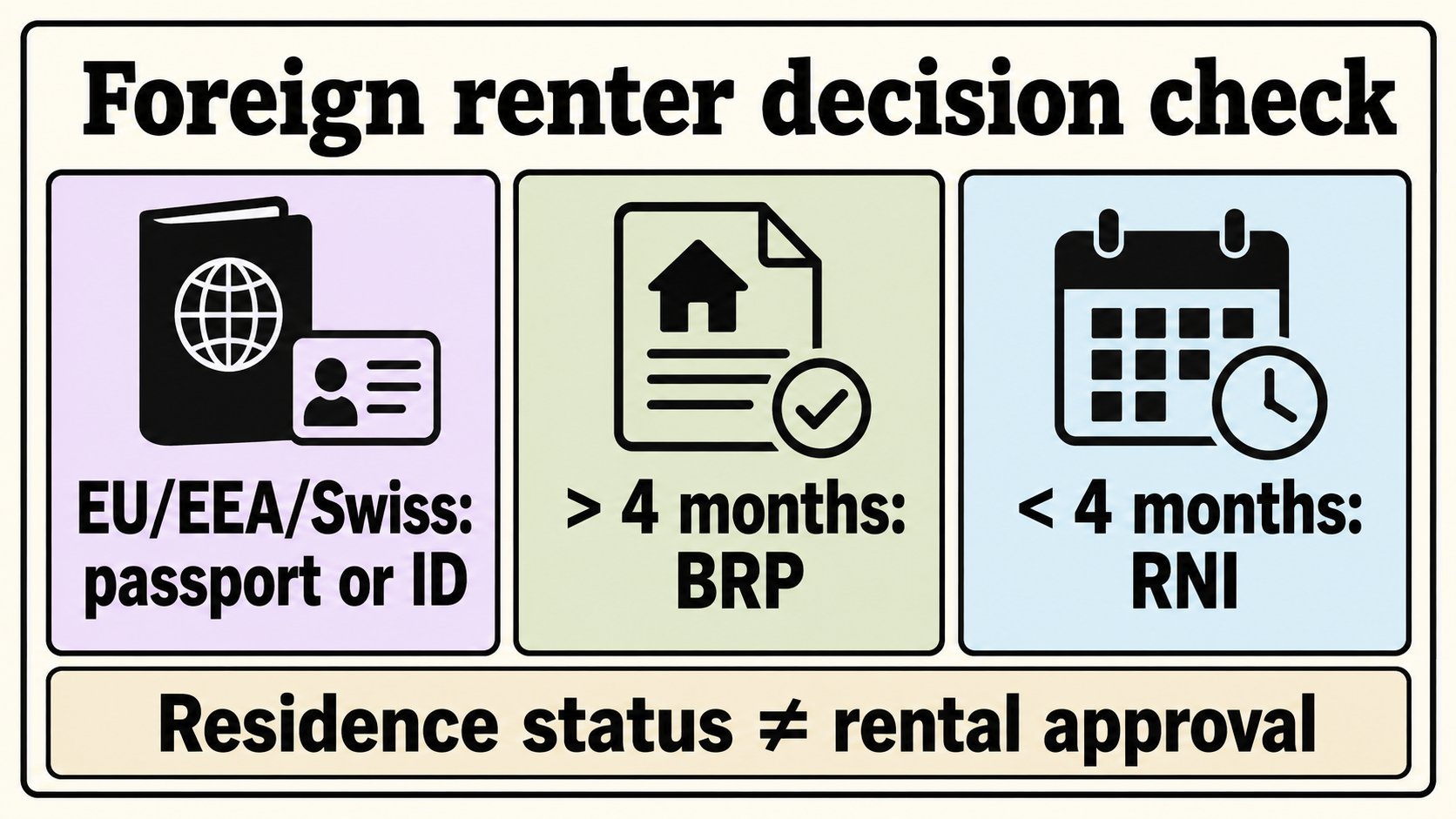
- Where should you register? A stay of more than four months normally points to the BRP; a shorter stay may fit the RNI when its conditions are met.
- Will a provider accept the application? A landlord or agent can assess income, documents, household fit and contract terms separately.
A passport, residence document or BSN can explain part of your situation. None of them guarantees a home. A rental basics clarifies the Dutch terms that sit behind the application.
What the phrase means for a renter
“Foreign renter” describes the renter’s position in relation to the Dutch system, not one legal category. An EU citizen moving for work, a student from outside the EU, a person staying for three months and a person moving for a year may all need different documents and registration steps.
The useful starting point is the planned stay, the purpose of the stay and the address you expect to use. Keep the immigration question, the municipal registration question and the rental-contract question in separate notes. Combining them creates avoidable confusion: a landlord may ask for a document that helps assess your file, while the municipality may ask for evidence that serves a different decision.
The three checks
1. Lawful stay
Your residence position comes first. EU, EEA and Swiss citizens generally use a valid passport or identity card as proof of lawful residence under the IND’s current guidance. People from outside those groups may need a visa or residence permit depending on nationality, purpose and length of stay.
The exact conditions matter. An employment contract can support one residence situation, while study, family reunification or sufficient independent means can lead to another. A rental advert cannot decide which immigration document applies. Check the official residence information for your situation before treating a provider’s request as an immigration instruction.
2. BRP or RNI registration
If you expect to live in the Netherlands for more than four months, municipal registration in the BRP is normally part of the move. A shorter stay may fit registration as a non-resident in the RNI when the RNI conditions are met. Both registrations connect to the BRP system, but they serve different situations.
Registration timing does not turn into a universal landlord rule. Some providers ask for a BSN or a registration plan; others assess an application before the number is available. The BSN and registration check separates a missing number from the wider question of whether a provider will screen an application.
3. Rental approval
The provider’s decision concerns the home and the agreement. Screening can cover income, employment or study evidence, identity, household size, previous rental information and the provider’s stated selection criteria. The provider should explain what it needs and who receives the documents.
A residence document does not promise acceptance. A BSN does not prove that the income file is sufficient. A registration appointment does not replace contract review. Treat these as separate checkpoints and ask one precise question when a request crosses them.
The rental file to prepare
Start with a small, explainable file rather than sending every document you have:
- passport or identity document, with unnecessary numbers covered where the recipient allows it;
- residence or status evidence that applies to your situation;
- employment, study or income evidence matching the provider’s stated criteria;
- planned stay length and registration position;
- the advert, address, base rent, recurring charges, deposit and contract term.
A rental application review organizes the file without sending every sensitive document to an unknown recipient. Ask how documents should be supplied, how long they are retained and which decision each one supports.
Two timing examples
A three-month stay
A person planning a three-month stay may fit the RNI time frame if the RNI conditions are met. They can ask the provider which identity, income and status documents are needed, while keeping the rental offer separate from the registration decision.
A six-month stay
Someone planning to live in the Netherlands for six months crosses the four-month BRP marker. Municipal registration becomes part of the move, but lawful stay and rental screening still need their own checks.
These examples show how timing changes the preparation. They do not decide a person’s residence entitlement or whether a particular landlord will accept an application.
Related terms that are easy to mix up
- BSN: a personal number used in many Dutch administrative processes. Having one does not guarantee a rental.
- BRP: the resident registration used when someone lives in the Netherlands as a resident.
- RNI: the non-resident registration that may fit a shorter stay when its conditions are met.
- Residence permit: permission connected to a non-EU residence situation, where required. It is not a rental contract.
- Rental application: the provider’s file and selection process for one home.
The total rental cost keeps base rent, recurring charges and one-time costs separate once the documentation question is clear.
Questions readers ask
Can I rent before I have a BSN?
Sometimes a provider will assess an application before the number is available, but there is no universal landlord rule. The stay, status, provider policy and registration plan all matter.
Does a residence permit guarantee a rental?
No. It addresses a lawful-stay question. The provider can still assess income, identity, household fit, documents and the contract.
Is BRP the same as RNI?
No. BRP registration is for residents, while RNI registration is for non-residents who meet the shorter-stay conditions. The expected length of stay is an relevant starting fact.
Should I send a full passport scan to every advertiser?
Pause and check the recipient, purpose, secure transfer method and requested fields first. Cover unnecessary numbers where appropriate and keep a record of what you sent.
What if a provider says that a BSN is required by law?
Ask which legal or administrative step the provider means and whether it is a provider policy instead. A BSN request, BRP registration and residence status can have different reasons.
Next step
The rental basics sets out the Dutch vocabulary, and the rental application review organizes the evidence around the provider’s question. If the provider’s request still combines status, registration and approval, contact us through the form with the stay length, document wording and rental question.
Residence status, municipal registration and a landlord's rental decision answer different questions. If a provider's request mixes them together, send the wording through the contact form and we can help you frame the next check.
Ask about renting as a foreigner →