Dutch Rental Timeline FAQ
Clear answers about timing a Dutch rental search, application, contract, payment, handover and municipal registration.
Short version
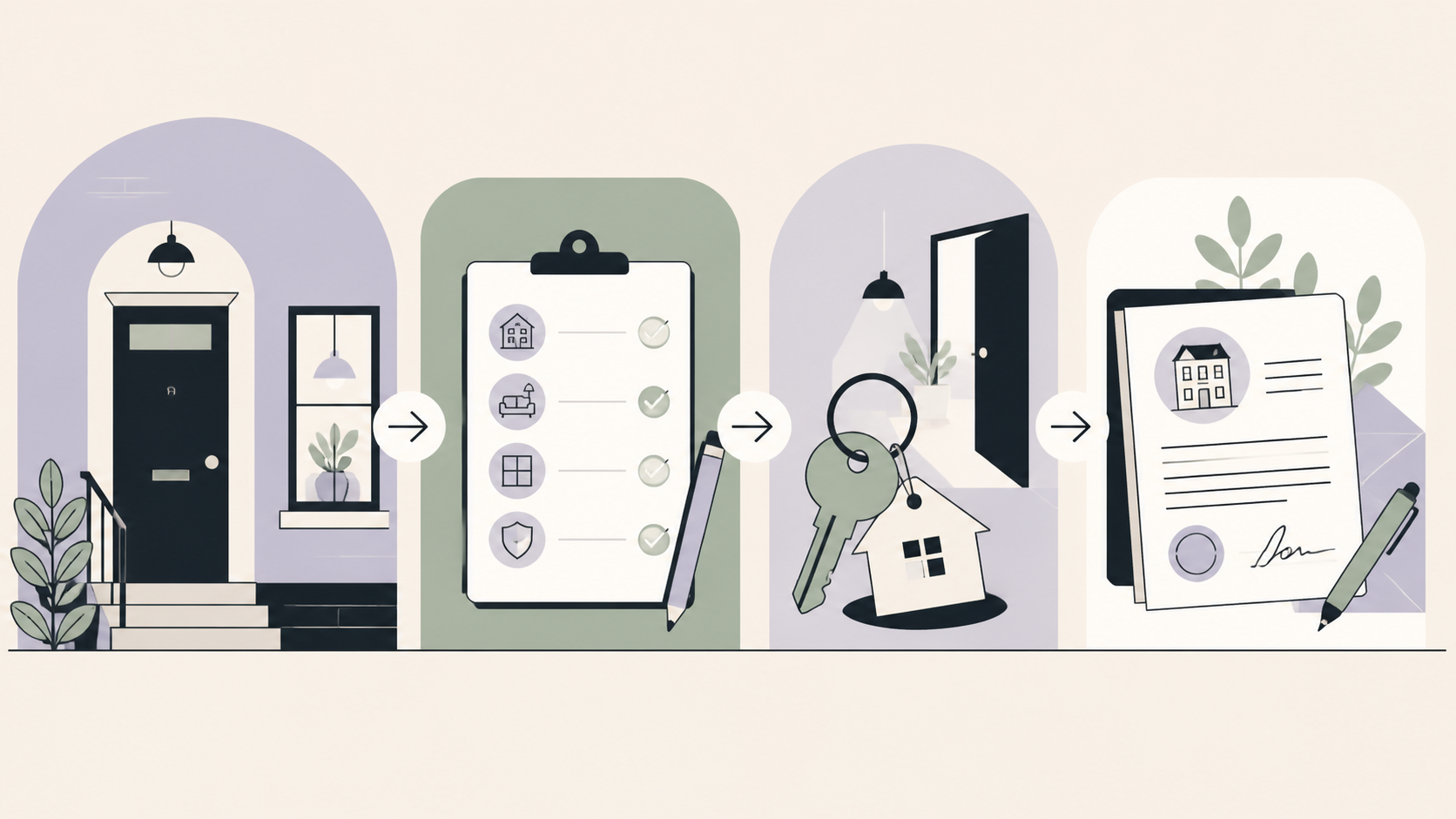
There is no single answer to “how long does renting take?” because search, provider selection, contract review, handover and municipal registration are different events. The fastest useful answer identifies the stage, the missing decision and the condition that can change the date.
If you are weighing renting against buying, separate your monthly rent budget from the costs of buying a house in the Netherlands. Transfer, professional and post-key costs land at different points in the purchase.
Registration depends on your actual stay and the municipality. If you expect to live in the Netherlands for more than four months, the BRP timing rule normally points to resident registration within five days of arrival. A temporary stay of four months or less may fit the RNI process. The municipality decides which evidence it needs.
Quick navigation
- Getting started questions
- Contract and cost questions
- Application and registration questions
- Troubleshooting and support
Getting started questions
How long does a Dutch rental application take?
There is no universal national response time. A provider may need to compare applicants, verify documents or prepare written terms. Set a target for the parts you control, then treat acceptance as pending until it is confirmed. Keep viewing, screening, contract and handover separate with the six-stage rental timeline.
When should I apply after a viewing?
Apply when you understand the home, the requested evidence, the complete cost and the selection conditions. Applying quickly can make sense for a competitive home, but speed should not remove the question of who receives your documents or how they will be used.
Does the advertised start date guarantee move-in?
No. It is a proposed availability date until the provider confirms acceptance, the written agreement and the handover arrangement. Keep the date marked as proposed if any of those decisions is still open.
Contract and cost questions
When should I sign the agreement?
Sign after checking the address, parties, base rent, service costs, term, deposit, repairs, access, notice and payment instructions. Agreements from 1 July 2023 must be in writing under the Dutch tenant step-by-step plan. A signature should confirm terms you understand, not merely reserve a date.
When should I pay the deposit?
After you have verified the party, the written terms, the purpose of the payment and the process for payment. For agreements from 1 July 2023, the deposit may not exceed two months of base rent. Keep deposit, monthly rent, service costs and utilities as separate lines in the full rental-cost comparison.
Can service costs change the timing?
They can change affordability and so the decision to apply or proceed. Ask what the service-cost advance covers and how it is settled. The amount should not be hidden inside a single headline rent number when you are deciding whether the home fits your budget.
Application and registration
When should I send rental documents?
Send only the category needed for the stated assessment, through a verified recipient and a clear process. The rental-application documents can be prepared in a controlled order: identity, income, address and right-to-stay evidence. Do not send a complete personal archive just because a message is urgent.
When should I register at the address?
Your actual stay and municipality control the date. For a stay longer than four months, resident registration normally takes place within five days after arrival; a shorter stay can fit RNI. Ask the municipality which evidence it needs for your address.
Is a landlord’s registration statement enough?
No. A landlord can explain whether the address is intended for occupation, but the municipality handles registration. Keep the provider’s statement and the municipal process as two separate timeline items.
Troubleshooting and support
What if the provider stops replying?
Write one short status question with the property address, application date, last confirmed event and the decision you need. Do not add more personal documents unless the recipient explains why they are needed. If no answer arrives, keep other options open rather than treating silence as acceptance.
What if the contract is ready but the handover is not?
Ask who holds the keys, when the condition will be recorded, when meter readings will be taken and what happens if an item is missing. The contract and the handover record answer different practical questions.
What if a date changes after I have planned a move?
Recalculate only the dependent steps. Mark the old date as replaced, record who confirmed the change and ask which obligation or handoff caused it. A visible dependency is more useful than an unchanged plan that no longer matches the evidence.
Limits to a timeline
The timeline cannot predict a provider’s private workflow, the number of applicants, a municipality’s evidence decision or the availability of a previous occupant. It can still show which action is yours, which answer is pending and which document is relevant. That is the boundary between planning and prediction.
Next step
Write your question using this structure: “The last confirmed event was __. The open decision is __. Which date or document confirms it?” If the wording still needs a second set of eyes, send the question through the contact form without personal documents.
A useful timing question names the event that is confirmed and the decision that is still open. If a provider’s answer is incomplete, send the wording through the contact form. Do not send passports, contracts, bank details or other personal documents.
Ask a timeline question →