What Is the Dutch Rental Timeline?
A plain-language definition of the Dutch rental timeline, including listings, viewings, applications, agreements and move-in.
Short version
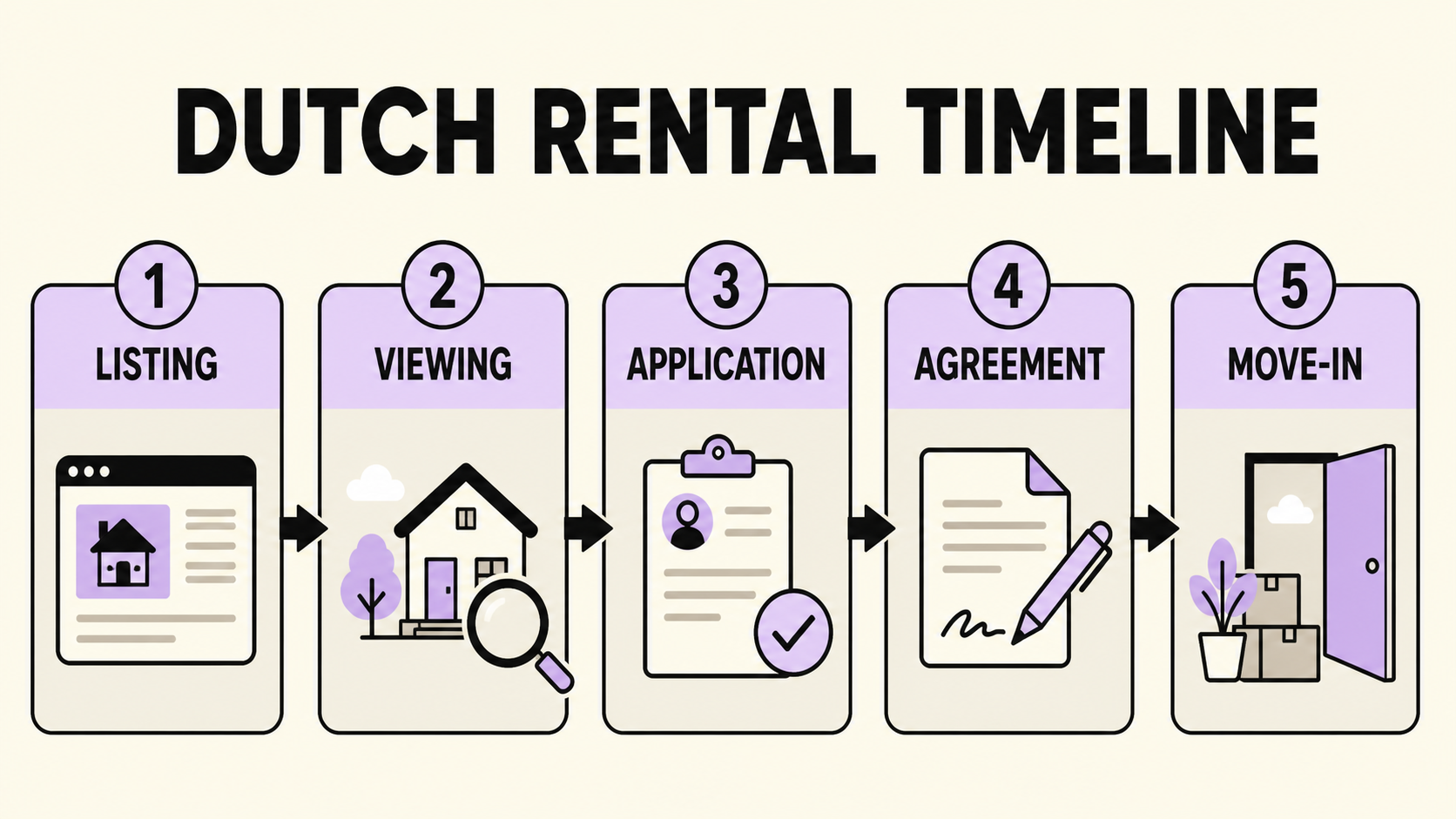
The Dutch rental timeline is a planning model for the stages between a rental listing and moving into the home. It covers listing, viewing, application, agreement and move-in. It is not a nationwide promise that every provider must accept an application, prepare a contract or hand over keys within a set number of days.
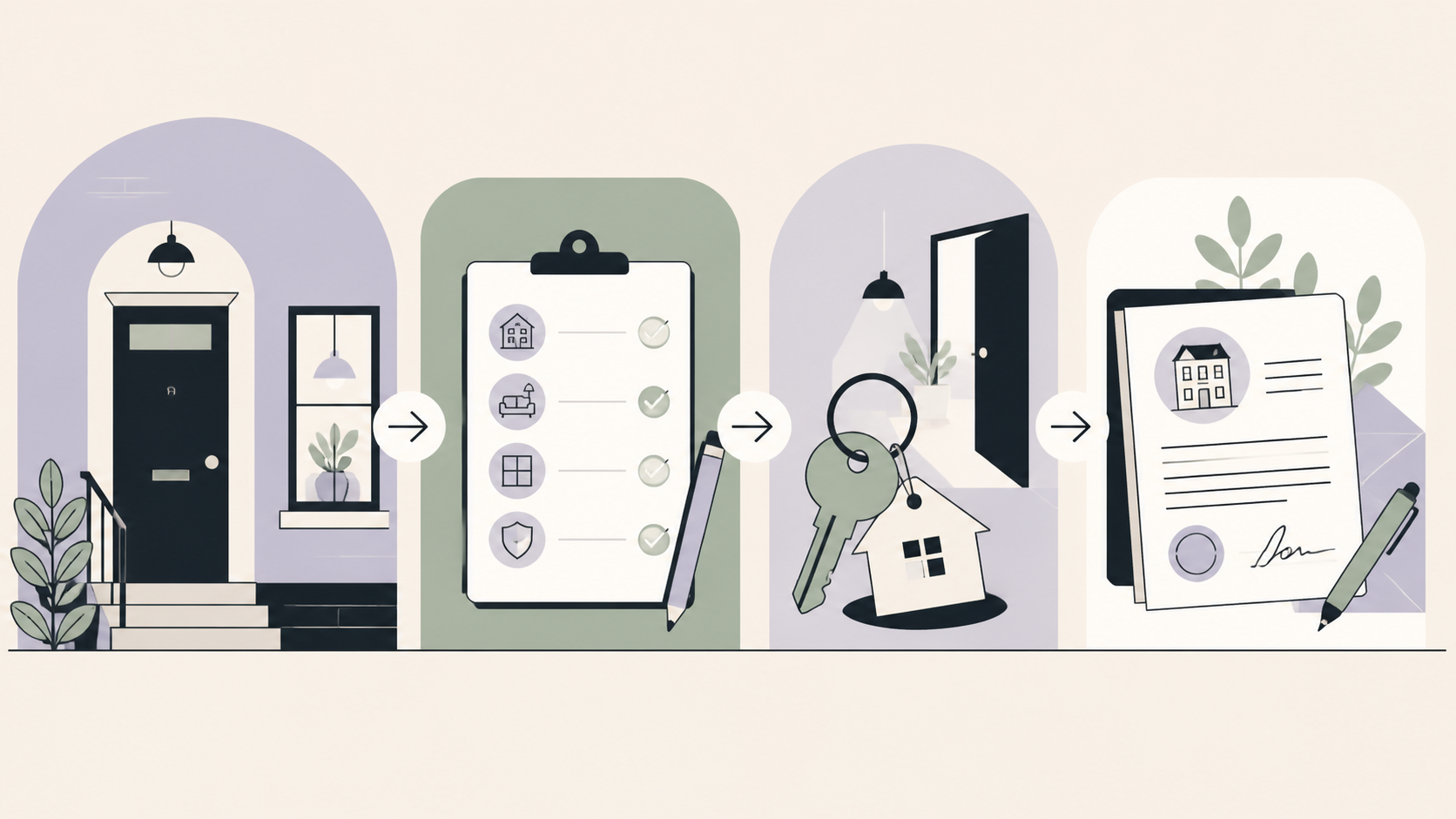
An agreement converts the proposed rental into written conditions. Check the parties, address, base rent, service costs, term, deposit, repairs, access and payment instructions. The Dutch government’s rented-housing rules distinguish social, mid-price and private sectors, so the rent category and points information can affect which questions belong in the contract review.
Registration date is linked to the address and your expected stay. For a stay longer than four months, BRP resident registration normally takes place within five days of arrival. That municipal obligation is different from the provider’s selection process.
The model helps because each stage answers a different question. Is the home suitable? Has the provider received the application? Has the renter been accepted? Do the written terms match the discussion? Has the home actually been handed over?
What the term means
Use “Dutch rental timeline” to describe the sequence of decisions and handoffs in a rental search. It can be short or long depending on the home, the provider, the number of applicants, the documents requested and the agreed start date. Turn those stages into dates with the practical timeline for renting in the Netherlands without inventing a market average.
The phrase does not mean that a landlord must give an instant answer. It also does not make an advert, viewing or application equivalent to a contract. Those distinctions protect the renter from paying, moving or sharing sensitive information before the relevant decision is confirmed.
If you may rent for a while before buying, mortgage readiness for Dutch home buyers puts your savings, income and borrowing capacity into the purchase decision.
The five stages
Listing
The listing describes a possible home and may include base rent, service costs, availability, location and selection conditions. Treat it as information to test. Ask whether the advertised amount excludes utilities or other charges, because a simple-rent number does not by itself describe the monthly cost.
Viewing
The viewing lets you compare the description with the physical home and ask questions about condition, access, inventory and the expected start date. It is a fact-finding step. Unless the provider says otherwise in clear written terms, attending a viewing does not reserve the home.
Application
An application gives the provider information to assess. Before sending documents, ask what is needed, why it is needed, who receives it and when it will be deleted or returned. The documents for a Dutch rental application are easier to control when identity, income, address and right-to-stay evidence are kept as separate categories.
Agreement
The agreement turns a proposed rental into written conditions. Match the parties, address, base rent, other charges, term, deposit, repairs, access and payment instructions before you sign.
Move-in
Move-in is the practical handoff: keys, condition, meter readings, inventory and the date from which the renter can occupy the home. A contract can be signed before every handover detail is resolved. Record the open items and keep them separate from municipal registration.
Related terms that are easy to mix up
Application date is when the provider receives your information. It is not the acceptance date.
Acceptance is a provider’s decision to proceed. It is not necessarily the moment a complete agreement is signed.
Start date is the date written into the agreement or confirmed for occupancy. It should not be inferred from an advert.
A useful example
Imagine that a listing is published on Monday, a viewing is held on Wednesday, an application is sent on Thursday and the provider asks for two days to screen it. The timeline contains four known events, but no move-in date exists until the provider accepts the application and the written terms are agreed. Calling Thursday “the move-in date” would collapse four different decisions into one assumption.
Questions readers ask
Is the Dutch rental timeline a legal term?
No. It is a practical label for the sequence of rental stages. Individual legal duties still depend on the agreement, housing rules, municipal registration and the circumstances.
How long should each stage take?
There is no reliable universal duration. Set a target for the steps you control, then mark provider and municipality steps as pending until they are confirmed.
Where do costs belong?
Costs belong in every stage. Compare base rent, service costs, utilities, deposit and one-time charges before treating an application as affordable. The rental-cost comparison keeps monthly and one-time amounts distinct.
Next step
Write down the current stage, the decision that ends it and the evidence you still need. If one date or phrase remains unclear, send the exact wording through the contact form without including personal documents.
A timeline label is useful only when it tells you what must happen next. If a listing, application or contract uses an unclear date, send that wording through the contact form. Do not send passports, contracts, bank details or other personal documents.
Ask about a rental stage →