Free Sector vs Social or Regulated Sector in the Netherlands
Compare Dutch social, mid-price and free-sector rental rules through the 2026 rent limits, points bands and contract checks that matter to a tenant.

Short version
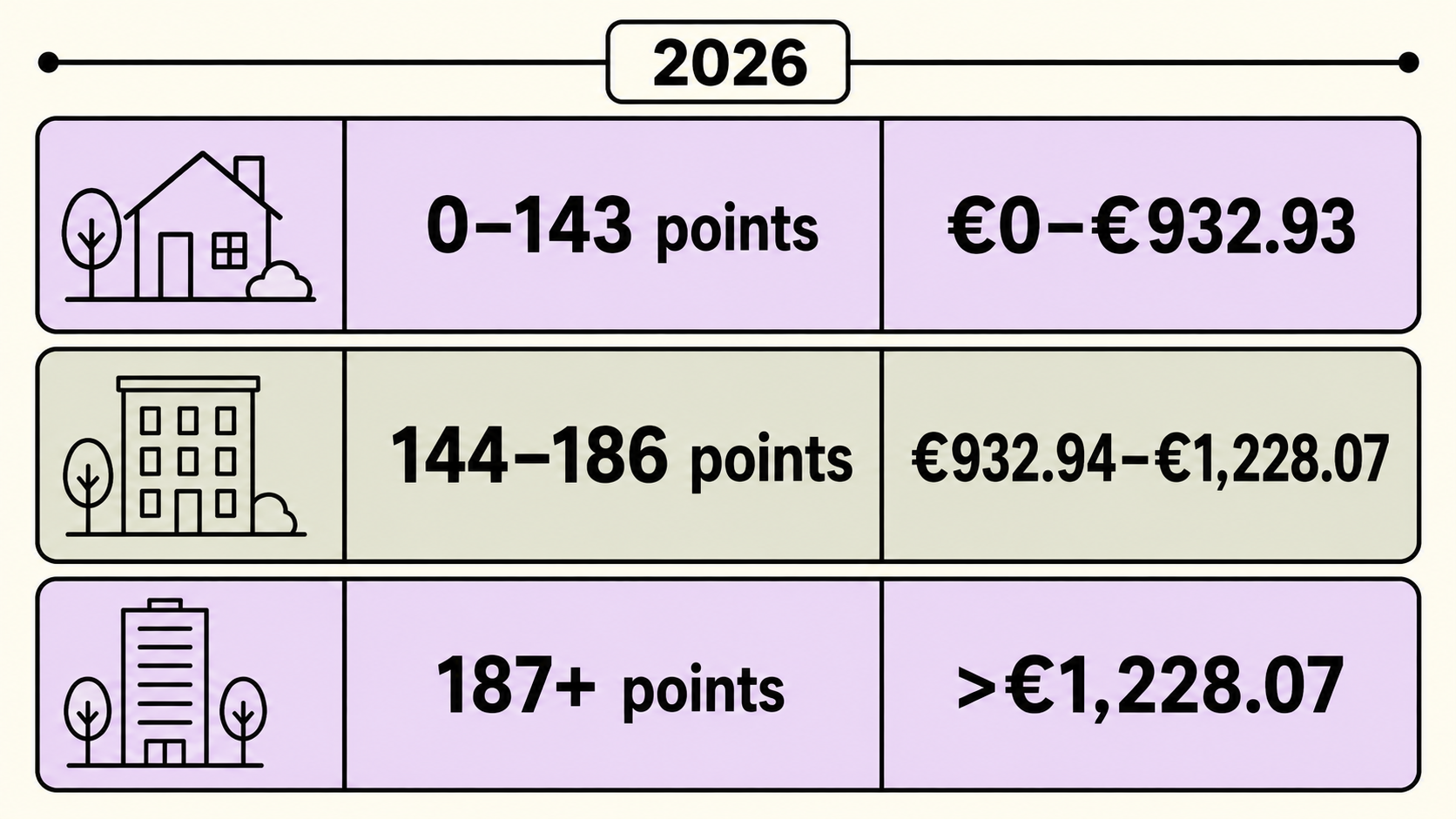
In the Netherlands, social or regulated, mid-price, and free-sector rental are three different price and protection frameworks. The building style is a separate question. For a self-contained tenancy that starts in 2026, the useful starting markers are the initial base rent, the home’s WWS points and the contract start date:
- Up to €932.93 and up to 143 points is the social or regulated band.
- Above €932.93 to €1,228.07, with 144 to 186 points, is the mid-price band.
- Above €1,228.07, with 187 points or more, is the free-sector marker.
Those figures classify an orientation question, not a complete answer about affordability or legality. Keep the base rent separate from service charges, utilities and other recurring costs. Put sector, price, supply, rules and place together with the Dutch rental market.
What the comparison is actually comparing
The sector label sits at the intersection of four facts:
- Accommodation: Is it self-contained, or are the kitchen, toilet or bathroom shared?
- initial base rent: What is the rent excluding service charges and utilities at the start of the agreement?
- Quality points: How many WWS points follow from the rooms, facilities, energy performance, WOZ value and outdoor space?
- Date: Which rent limits and rules applied when this agreement began?
An advert can show a monthly number without answering all four. The phrase “free sector” is not a substitute for checking the accommodation or the agreement.
Social or regulated rental
For a self-contained tenancy beginning in 2026, an initial base rent up to €932.93 sits at the social threshold when the home falls within the relevant points band of up to 143 points. The rent is subject to a ceiling calculated from housing quality. A room also has a points-based maximum, with shared facilities changing the assessment.
Social does not mean “small”, and it does not always mean that a housing association owns the building. The label describes a rent framework and the access rules attached to it. A housing association may apply income rules for its allocation, while a private landlord can offer a regulated home under the applicable rent rules.
The practical question is: What is the initial base rent, what is the points score, and which facilities are private?
Mid-price rental
The mid-price band covers a self-contained agreement starting in 2026 with an initial base rent above €932.93 and no more than €1,228.07 when the home has 144 to 186 points. Both the rent and the points matter. A monthly amount alone cannot establish the category.
This band is easy to misread because an advert may call a home “private” in the everyday sense. That does not settle the legal rent framework. Keep the ad wording, the base-rent line, the points information and the agreement date together.
The Huurcommissie Rent Check is the practical starting point for a points-based rent estimate. It uses details such as the energy label, rooms, kitchen, bathroom, WOZ value and outdoor space. A calculator result is an estimate; a formal assessment can still differ when facts or measurements differ.
Free-sector rental
For a self-contained agreement beginning in 2026, the free-sector marker is an initial base rent above €1,228.07 together with at least 187 points. A liberalised agreement has no maximum rent based on the points table, though the tenancy still sits inside wider rules about contracts, deposits, service charges, maintenance, rent increases and landlord conduct.
“Free” does not mean every amount is sensible, every cost is included, or every clause is acceptable. It means the agreement falls outside the social and mid-price rent ceiling under the applicable classification. Check the written terms and the complete monthly cost before deciding.
Three worked listing examples
These examples show the method. They are not a national price forecast.
Example A: €900 and 130 points
Assume a self-contained agreement starts in 2026 and the €900 figure is the initial base rent. The amount is at or below €932.93 and the points are within 143. That is a social or regulated orientation, subject to checking the underlying facts.
Example B: €1,000 and 160 points
The €1,000 base rent is above €932.93 and below €1,228.07. The 160 points sit inside the 144 to 186 band. That is a mid-price orientation for a 2026 start date.
Example C: €1,350 and 190 points
The €1,350 base rent is above €1,228.07 and the 190 points clear 187. That is a free-sector orientation for a self-contained 2026 agreement. The classification does not make the home affordable for your household.
A five-step check before you apply
- Copy the advert and write down the date you saw it.
- Circle the base rent and list service charges, utilities, furniture, parking and internet separately.
- Confirm whether the entrance, kitchen, toilet and bathroom are private. For a room or self-contained home, the distinction between self-contained homes, rooms and social housing sets the facility and rent framework before labels are compared.
- Ask for the points information and record the agreement start date.
- Compare the written agreement with the advert. When the advert and agreement do not line up, a rental contract review can reconcile the written terms.
Questions renters ask
Is social housing only housing-association housing?
No. “Social” can describe the rent framework. Allocation rules and ownership are separate questions. Check who offers the home, which income rules apply and which rent rules match the agreement.
Does free sector mean there are no rent rules?
No. The points-based maximum for a liberalised self-contained agreement is different from the wider rules that still cover contracts, deposits, service charges, maintenance and rent increases.
Can a room be free sector?
Do not assume so. Shared accommodation has its own points and maximum-rent assessment. Check the facilities first and use the shared-accommodation option in the Rent Check.
Does the advert’s total monthly amount decide the sector?
No. Start with the initial base rent, then check points, facilities and contract date. Service charges and utilities should not be quietly folded into the classification.
Next step
A compare rental options can record the same facts for two addresses. If an advert still leaves the sector unclear, contact us through the form with the base rent, points and contract date.
A label such as free sector or social housing does not tell you the whole story. If an advert leaves the base rent, points, contract start date or facilities unclear, send the wording through the contact form and we can help you frame the next question.
Ask about a rental sector →