Furnished vs unfurnished rental in the Netherlands
Compare furnished, upholstered and bare rental homes using current listing data, move-in work, inventory and total cost.
Short version
Choose furnishing level by comparing three things at once: the monthly rent, the cost and time needed to make the home usable, and the flexibility you need at the end of the tenancy. A furnished home can reduce the first shopping trip. A bare home can reduce the monthly price and give you control over your own furniture. An upholstered home sits between those choices.
Current listing data shows why the distinction matters. In Pararius’s professional free-sector offer for Q1 2026, furnished homes made up 43.4% of the offer, up from 35.0% a year earlier. Bare homes made up 23.5%, down from 31.7%. The dataset describes homes marketed through Pararius, rather than every Dutch rental home.
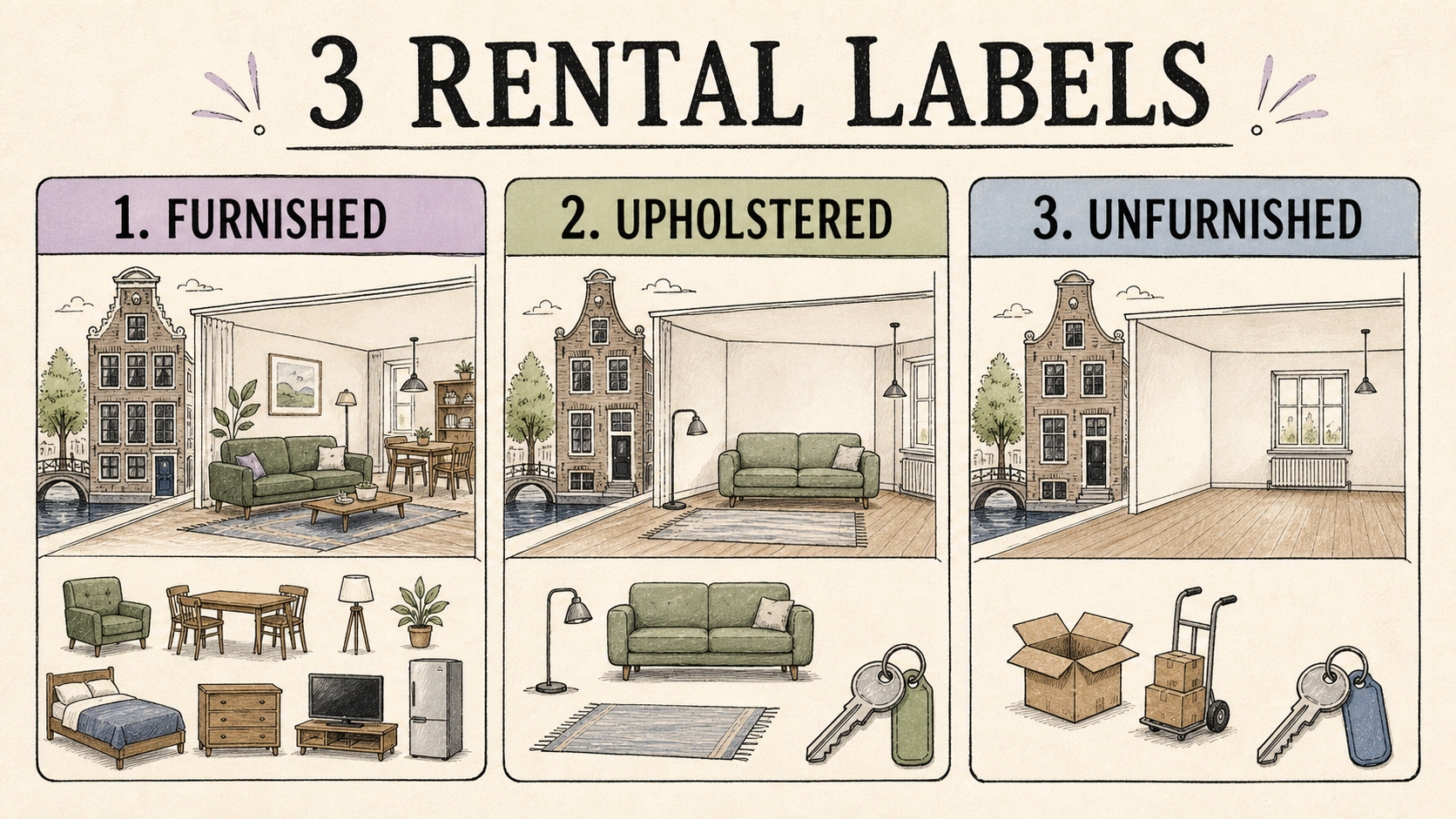
What the three labels mean
Furnished
A furnished home normally includes movable furniture such as a bed, sofa, dining table, storage and curtains. It may also include lamps, kitchen equipment or appliances. “Furnished” is a listing description, so the inventory controls what actually stays.
Ask whether the furniture is included in the rent, listed as a separate charge or supplied under a separate agreement. Record condition, quantity and replacement responsibility before you sign.
Upholstered
An upholstered or partly furnished home has floor coverings, window coverings and light fittings, while the larger furniture is yours to give. The exact Dutch terms vary by listing. Ask whether the flooring is removable, which lamps remain and whether the kitchen has appliances.
This option can suit a renter who wants a ready-to-use floor and curtains but already owns furniture. It can also create confusion when a listing uses “semi-furnished” without an inventory.
Bare or unfurnished
A bare home generally leaves more of the movable furniture to the renter. It may still have fitted kitchen units, sanitary fixtures, heating and other permanent elements. Those fixtures are different from a bed, sofa or freestanding appliance.
Budget for delivery, assembly, curtains, lamps and storage. A lower monthly rent does not automatically produce a lower first-year cost if the move-in list is long.
The current price signal, with the maths shown
Pararius reported these Q1 2026 average rents per square metre in the professional free-sector listing dataset:
- Furnished: €26.79 per square metre.
- Upholstered: €25.23 per square metre.
- Bare: €20.01 per square metre.
The differences are useful for a comparison, not a quote:
- Furnished compared with bare: €26.79 minus €20.01 equals €6.78 per square metre, or about 33.9% above the bare average.
- Upholstered compared with bare: €25.23 minus €20.01 equals €5.22 per square metre, or about 26.1% above the bare average.
- Furnished compared with upholstered: €26.79 minus €25.23 equals €1.56 per square metre, or about 6.2% above the upholstered average.
For a 50 square metre illustration, the furnished-to-bare difference is 50 × €6.78, or about €339 per month. That is roughly €4,068 across twelve months before considering furniture purchases, utilities, service charges, vacancy, contract length or differences between locations. Pararius’s sample mix can move the averages, so do not use this arithmetic as a rule for a particular address.
A total rental cost lets you add the charges that do not appear in a per-square-metre comparison.
Compare the move-in workload
Furnished: inspect the inventory, test appliances, photograph existing wear and confirm what happens when an item breaks. Your move may be lighter, but the condition record becomes more relevant.
Upholstered: check the floor, window coverings, lamps and appliances. Price the missing furniture before deciding that the middle rent is a middle-cost option.
Bare: price the first usable week. Include a bed, seating, table, storage, curtains, lamps, delivery and assembly. Ask whether the home has working lights and all expected kitchen equipment.
Write these estimates in the same comparison record as the rent. The rental options comparison is useful when two homes have different furnishing levels.
Check the inventory and the contract
Ask for a dated inventory with a condition note. For a furnished home, list furniture, appliances, keys, remote controls and visible marks. Photograph each room at handover and keep the report with the agreement.
Huurcommissie guidance distinguishes movable items that can be removed without material damage, such as loose flooring, curtains, lamps, fridges, washing machines and furniture, from fixtures such as built-in appliances, radiators and tiled floors. A separate furniture or equipment charge needs a documented basis. The guidance gives examples of annual depreciation approaches, including five years for some movable items and ten years for some equipment, but those examples do not set an automatic premium for every home.
A rental contract review clarifies where to look for base rent, separate charges, inventory and repair responsibilities.
Which option fits which situation?
Choose furnished when: you need a fast move, expect a shorter stay, are arriving with few belongings or value a usable home more than maximum control over every item.
Choose upholstered when: you already have or plan to buy furniture but want the floor and window treatment handled.
Choose bare when: you expect a longer stay, own furniture, have time to shop and want to limit a recurring furnishing premium.
These are decision cues, not contract rules. Check the actual inventory and the full cost.
Three questions that reveal the real difference
- Which items remain at the start and end of the agreement?
- Is any furniture, equipment or service charge listed separately from the base rent?
- Who repairs, replaces or removes each movable item?
If the answer is only verbal, ask for it in the inventory or agreement. Do not accept “everything shown” as a sufficient inventory for a high-value home.
Common mistakes
- Comparing furnished and bare homes by base rent alone.
- Treating “semi-furnished” as a standard legal category.
- Assuming every appliance shown in photographs is included.
- Failing to photograph marks, stains and missing items at handover.
- Paying a separate furniture amount without a written basis.
- Forgetting curtains, lights, storage and delivery when pricing a bare home.
Questions readers ask
Is a furnished home always more expensive?
The Q1 2026 Pararius averages show a higher per-square-metre figure for furnished listings in that dataset. A particular bare home can still cost more overall after furniture, transport, service charges and utilities.
Are fitted appliances furniture?
Huurcommissie guidance separates removable movable items from fixtures. Read the inventory and charge schedule for the specific home.
Can the landlord remove furniture later?
The agreement and inventory should say what is included. Ask for a written change before accepting a different inventory or charge.
Next step
Put the furnished, upholstered and bare scenarios into the rental options comparison, then add the move-in costs to the total rental cost.
Furnished, upholstered and bare homes shift the balance between monthly cost, upfront cash and flexibility. Compare the inventory, deposits, utilities and replacement responsibility before choosing a format.
Ask about furnished rentals →