What Does Renting Your Own Home Mean in the Netherlands?
Define renting your own home in the Netherlands, then check the dwelling, agreement, cost, registration and rights that make the phrase useful.
Short version
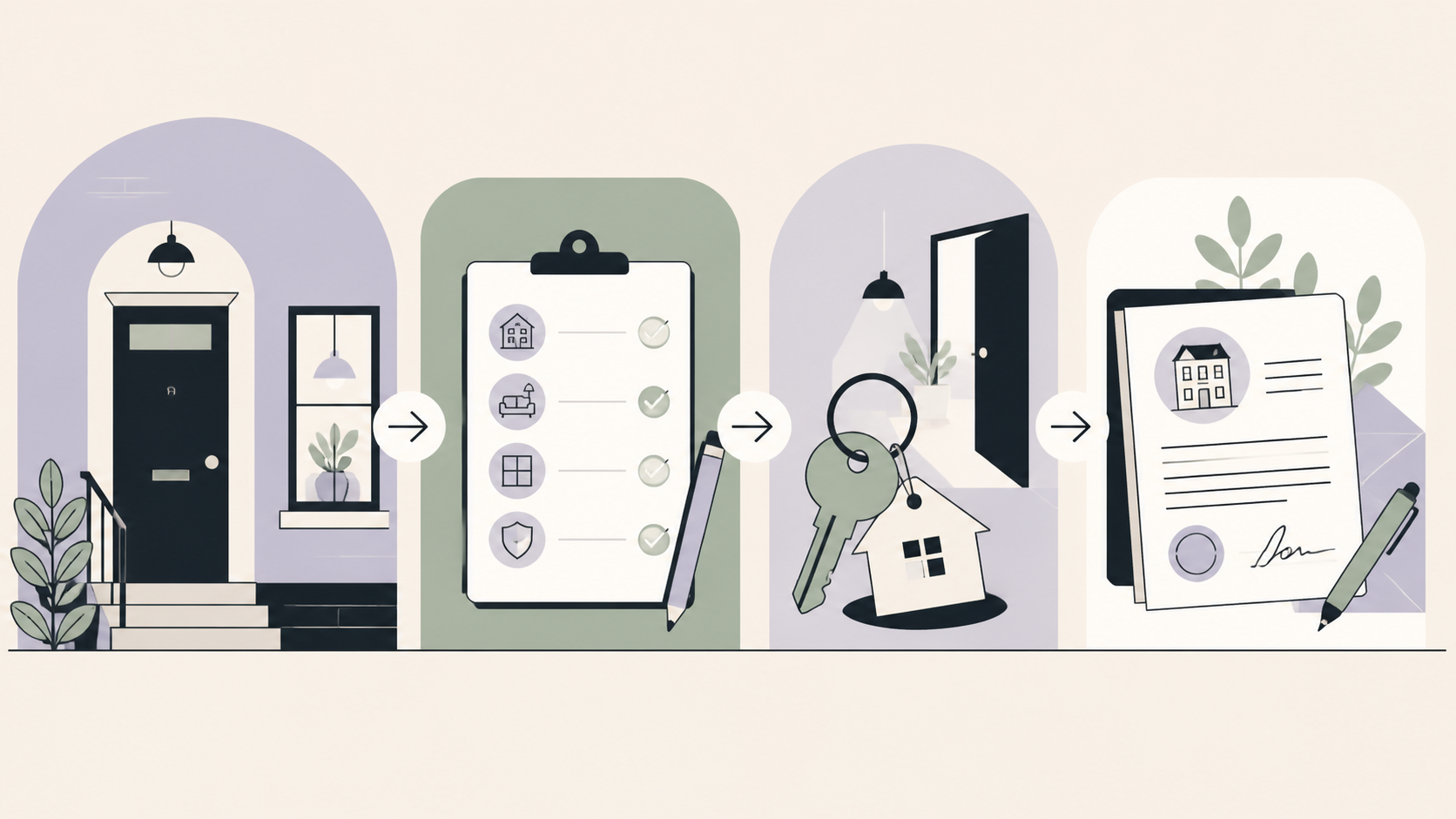
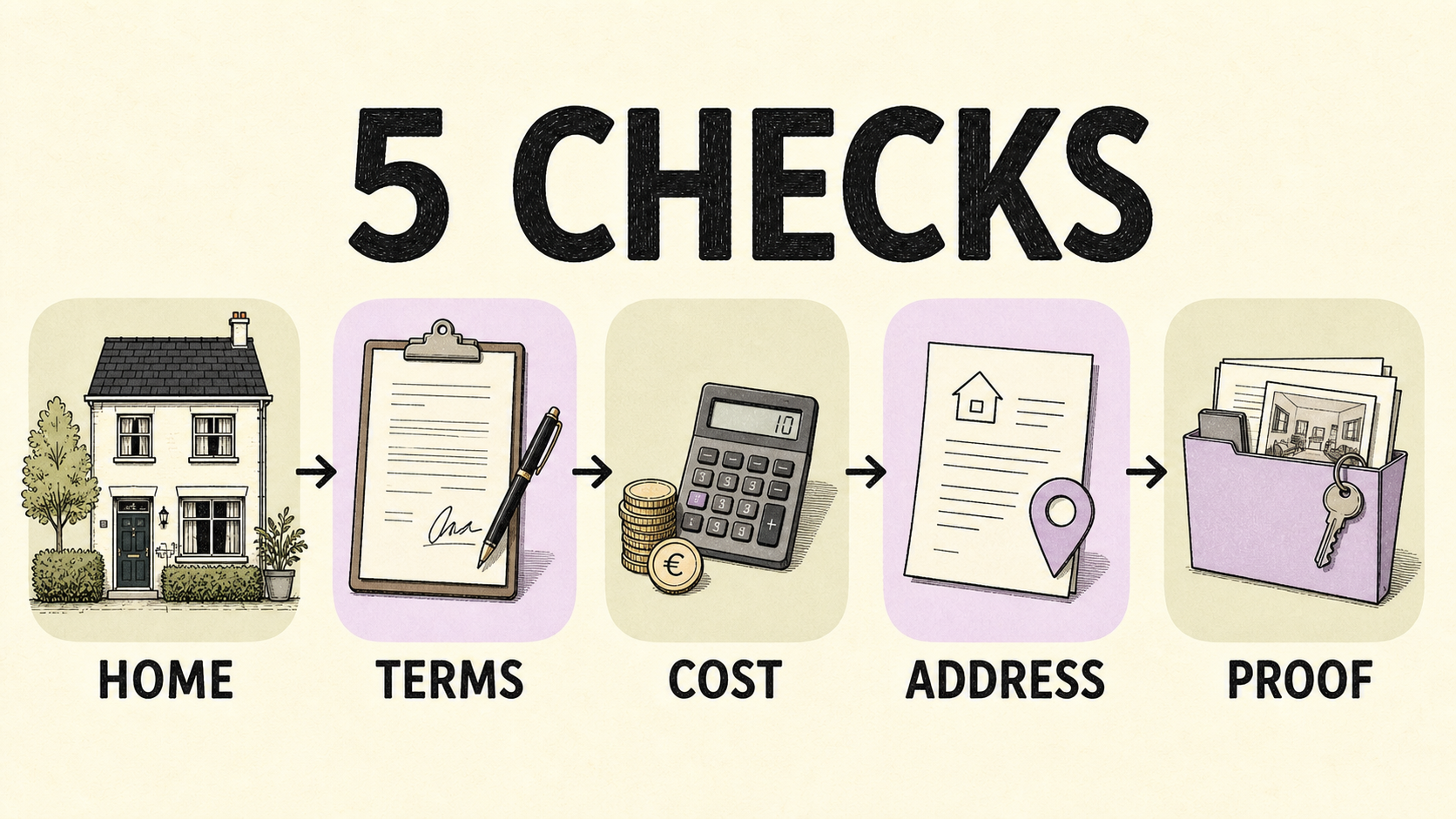
Renting your own home in the Netherlands means that you use a dwelling as a tenant under a rental agreement. The word “own” describes your household’s private use. The landlord keeps ownership. The useful definition depends on five checks: the facilities inside the dwelling, the written agreement, the full monthly cost, the registration position and the proof you keep.
A self-contained home has its own entrance, kitchen, toilet and bathroom. A room with shared kitchen or bathroom facilities belongs to a different housing category, even when an advert uses friendly wording such as “your own place”. When the label is unclear, the distinction between self-contained homes, rooms and social housing separates facilities, agreement and rent framework.
What the phrase covers
The phrase answers a practical question: will one household have a defined place to live under terms it can check? A useful answer includes:
- The dwelling: whether the entrance and necessary facilities belong to the unit or are shared.
- The agreement: who rents to whom, which address is covered, how long the term lasts and which charges apply.
- The money: base rent, service charges, utilities, insurance, travel and the cash needed at the start.
- The address: whether registration is possible and which municipal process fits the stay.
- The record: the advert, written offer, contract, condition report, payments and questions answered in writing.
The phrase alone leaves several details open. It does not tell you whether the home is social, mid-price or private rental, whether the rent is reasonable, or whether the address is available for municipal registration. Those questions require the listing, contract, point count and municipality’s information.
Self-contained home and room rental use different tests
Self-contained home
Huurcommissie’s Rent Check treats a home as self-contained when it has its own entrance and its own kitchen, toilet and bathroom. The home can be part of a larger building. The main question is whether the household can use those facilities without sharing them with another household.
Room rental
A rented room gives the tenant private space while one or more facilities are shared. The agreement can still include a clear room, address and monthly amount. Shared facilities affect the rent assessment, house rules, privacy and what “your own home” means in everyday conversation.
A studio needs a closer look
“Studio” is a marketing label. Read the floor plan and ask who uses the kitchen, toilet and bathroom. A studio with all private facilities can be self-contained. A studio with a shared bathroom follows a different analysis.
A rental basics can keep housing type, agreement and registration as separate questions.
Rent sector is a second layer
Housing type and rent sector describe different things. A self-contained home can sit in social, mid-price or private rental depending on the agreement start date, initial rent and points position. A room can have rent limits too, while its shared facilities still make it a room rental.
For agreements starting in 2026, government guidance uses these markers for self-contained homes:
- Social rental: initial base rent up to €932.93.
- Mid-price rental: initial base rent above €932.93 and up to €1,228.07, with a points position from 144 through 186.
- Private rental: initial base rent above €1,228.07 and a points position of at least 187.
These figures are a 2026 legal reference for classification questions. They do not replace the point calculation or a review of the agreement. The Huurcommissie Rent Check can help gather the property details needed for a rent assessment.
The cost meaning of “your own home”
A private dwelling still has more than one price line. Start with the base rent, then add charges that belong to the home and costs created by the household’s routine.
Here is an illustrative monthly calculation:
€900 base rent + €180 service charges and utilities + €45 insurance and travel = €1,125
The extra €225 is 25% of the €900 base rent. The calculation uses made-up planning values, so it cannot describe the Dutch market or promise a total. It gives you a repeatable way to compare two real listings. Keep recurring costs separate from the deposit, first payment, furniture and moving costs with the rental-cost breakdown.
Registration and the rental agreement
Municipal registration follows the address and expected stay. Government guidance says a person who lives in the Netherlands for more than four months generally registers as a resident in the Personal Records Database. A stay of less than four months can fit the non-resident registration system. Ask the municipality what evidence and timing apply to the address you are considering.
The rental agreement should make the parties, address, rent, other charges, duration, notice, repairs, house rules and inventory clear. Since 1 July 2023, landlords have had to give tenants a written agreement and information about rights and obligations. The rental process places these checks in order.
Common misunderstandings
- “Own” means ownership. In rental language, it means a household has private use under a tenancy. Ownership remains with the landlord.
- A whole apartment is always self-contained. Shared kitchen, toilet or bathroom facilities change the classification.
- A low base rent gives the full budget. Service charges, utilities, travel and setup cash can change the decision.
- A contract proves registration. The municipality decides registration requirements for the stay and address.
- The sector label answers every rent question. The contract date, points, initial rent and type of dwelling still matter.
Questions readers ask
Is renting your own home the same as buying a home?
No. A renter receives a right to use the dwelling under agreed terms. The landlord remains the owner, and the tenant pays rent for the agreed period.
Does a self-contained home have to be a house?
No. An apartment, studio or small house can be self-contained when it has the required private facilities and entrance. The building form is less useful than the actual layout and agreement.
Can I call a room my own home?
You can describe the room as your home in everyday speech. For a rental assessment, shared facilities and the written agreement place it in a different category from a self-contained home.
Does the phrase tell me if I can register?
No. Check the intended stay, address and municipality. Ask the landlord for the registration position in writing, then confirm the municipal process yourself.
What should I compare first?
Record the private facilities, base rent, other charges, deposit, contract term, registration position and condition. Put the same headings into the rental options comparison for each listing.
Next step
Choose one advert and write five answers: What facilities are private? Who signs? What is the full monthly cost? Can the household register? Which evidence is still missing? Before sending sensitive documents, let the rental document set set the evidence order and keep the meaning of renting your own home as the shorter definition.
If an advert invokes “the Dutch rental market” to create urgency, separate the market context in the Dutch rental market from the term definition in Dutch rental market; neither replaces address-level evidence.
“Your own home” can describe a self-contained rental, while the agreement and the address decide what you may use, pay and register. If a listing mixes housing type, price or registration promises, send us the wording and your questions through the contact form before you commit.
Ask about a rental definition →