FAQ: The Dutch Housing Shortage and Renters
Answers to practical questions about Dutch housing-shortage figures, including what the 2025 estimate measures and how renters should apply it to a local search.
Short version
The Dutch housing shortage is a modelled relationship between housing need and available homes. CBS puts the 2025 estimate at nearly 400,000 homes, equal to 4.8% of the housing stock. It gives national context, but it does not tell a renter how many people will apply for one address or whether a particular rent is fair.
What is being measured?
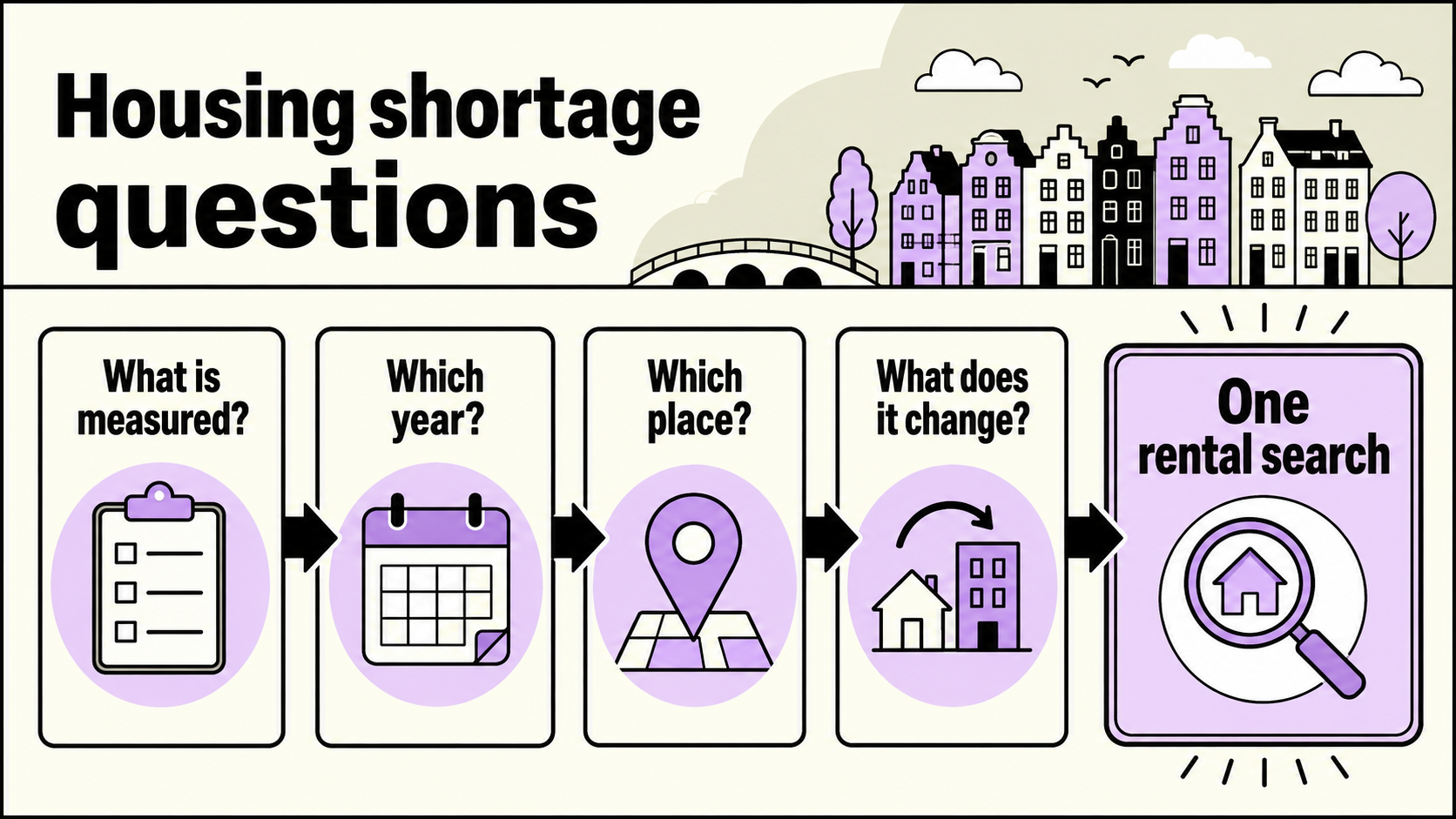
The estimate concerns homes needed within a defined housing system. It uses information about households, living situations and the housing stock. That is different from a count of people, applications, listings or a provider’s waiting list.
The housing-shortage definition names those components. Keeping the unit visible prevents a headline about homes from being repeated as a claim about applicants.
Which year does the figure describe?
Every figure needs a reference period. The 4.8% and nearly 400,000 homes describe CBS’s 2025 model estimate. A current advert, a municipal table or a household’s budget can refer to another period. Put the year beside the number whenever you copy it into a comparison.
The housing stock grew by 70,000 homes on balance in 2025 and exceeded 8.3 million homes at the end of the year. Those totals do not cancel the shortage automatically, because the number, type and location of households and homes also change.
Which place does the figure cover?
The shortage estimate is national. It cannot rank Amsterdam, Rotterdam, Groningen or a smaller municipality for every renter. Local supply, household mix, transport, sector and contract terms can produce different experiences inside the same national figure.
For a city decision, pair the national context with local evidence that matches the home type and time period. The Dutch rental market keeps sector, prices and supply in the same frame.
What does the figure change for one rental search?
It can explain why suitable homes attract attention and why a household benefits from a defined budget, location range and evidence checklist. It does not justify skipping provider checks, accepting unexplained costs or signing an unclear agreement.
The housing-shortage impact on renters ties system pressure to competition and trade-offs. Put real offers under the same price, space and contract questions in the rental options comparison.
More questions readers ask
Is the estimate a waiting list?
No. A model estimate is not a queue showing who receives the next home. A waiting list belongs to a particular provider or allocation system and uses its own eligibility and priority rules.
Does 4.8% mean 4.8% of renters are without a home?
No. It is the estimated shortage expressed as a share of housing stock. It does not classify every renter, homeless person or application.
Does a larger housing stock mean the shortage is over?
No. Stock can grow while households and the need for particular sizes or locations grow too. The date, type and suitability of additional homes matter.
Can the estimate tell me what rent to pay?
No. Rent needs a property, contract, sector and date assessment. The total rental cost also includes charges and one-time costs outside the shortage model.
What should I ask when a post quotes the shortage?
Ask for the unit, date, geography, method and the local evidence behind the comparison. If the post cannot answer those questions, treat it as context rather than a decision rule.
Next step
The common housing-shortage mistakes turn these questions into a quick correction routine. If a figure still does not state what it counts or where it applies, contact us through the form with the wording and your rental question. Do not include personal documents.
A housing-shortage answer depends on the unit, year, area and method behind the figure. If a statistic is being used to make a rental choice and one of those parts is unclear, send the wording through the contact form. Do not send passports, contracts, bank details or other personal documents.
Ask a housing question →